
Making Heat Visible: A Portable Thermal Imaging System for Resene
Heat loss is often invisible.
A wall may look perfectly uniform to the eye, while underneath the surface small differences in insulation, joints between materials, or construction details can create pathways for heat to escape. For Resene engineers developing better-performing construction materials, understanding these thermal characteristics is an important part of designing more energy-efficient homes.
Resene wanted a way to take this analysis out of the laboratory and into real buildings.
T4tech worked with Resene to develop a portable thermal imaging platform that could be taken directly to construction sites, capture high-quality infrared imagery, record where measurements were taken, and make the resulting data easy to review and analyse.
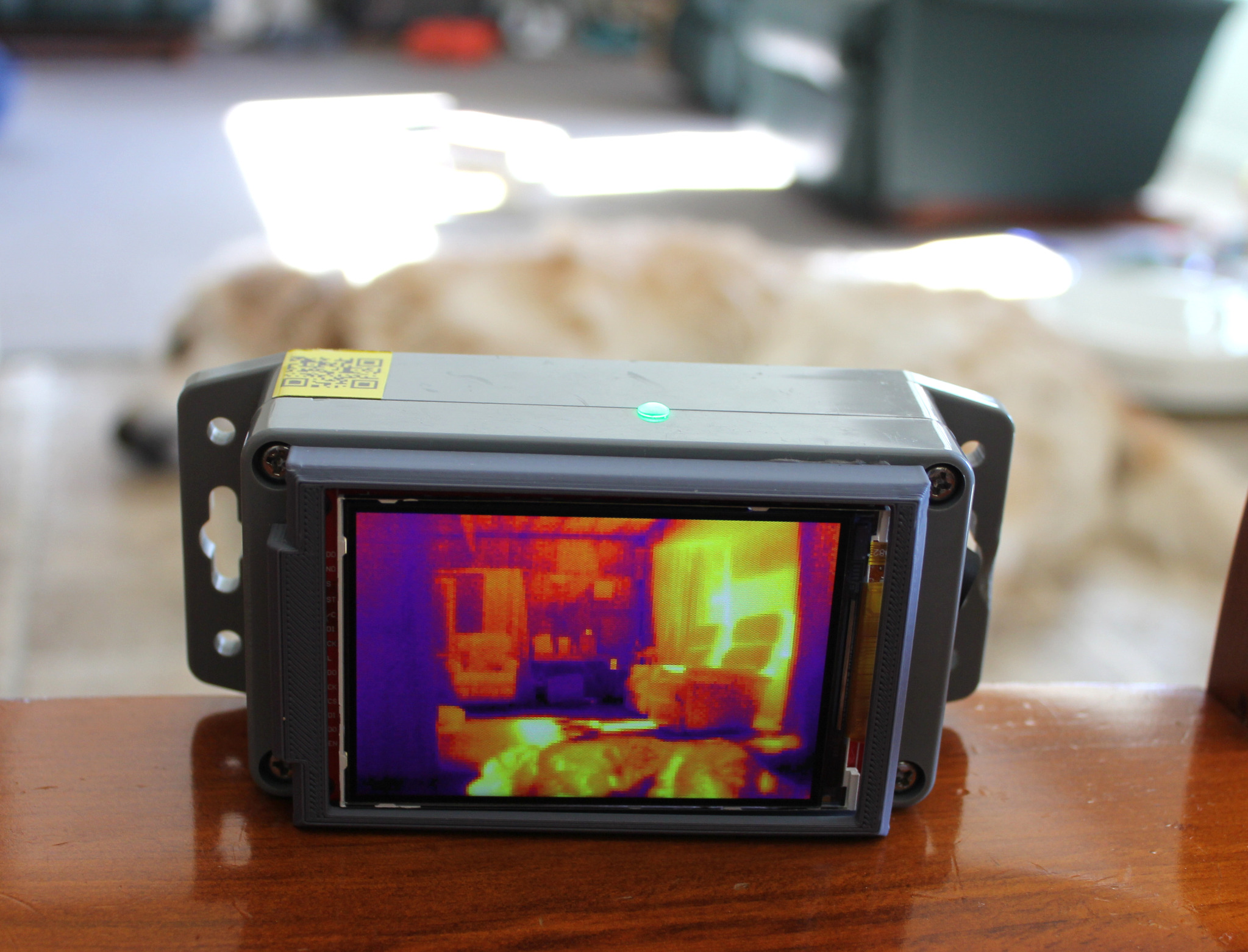
Seeing What the Eye Cannot
Thermal cameras measure infrared radiation emitted by surfaces and translate those measurements into an image representing differences in temperature.
Suddenly, something invisible becomes visible.
Areas that appear identical under normal light can show markedly different thermal behaviour through an infrared camera. This allows engineers to investigate insulation performance, material boundaries, thermal bridges and other regions where heat is behaving differently from the surrounding structure.
For Resene, however, simply having a thermal camera wasn’t enough.
The objective was to create a field engineering instrument built around the way their team wanted to collect and work with thermal information.
Instead of bringing samples back to a laboratory, the instrument could go to the building.
A Thermal Laboratory You Can Carry
The resulting system combines an aerospace-grade FLIR thermal imaging core, custom electronics, an integrated display, battery-powered operation and wireless connectivity into a compact portable instrument.
A Resene engineer can take the unit onto a construction site, inspect a wall, insulation system or material interface, and immediately see its thermal characteristics.
The camera makes it possible to identify areas worthy of closer investigation and capture those observations directly in the field.
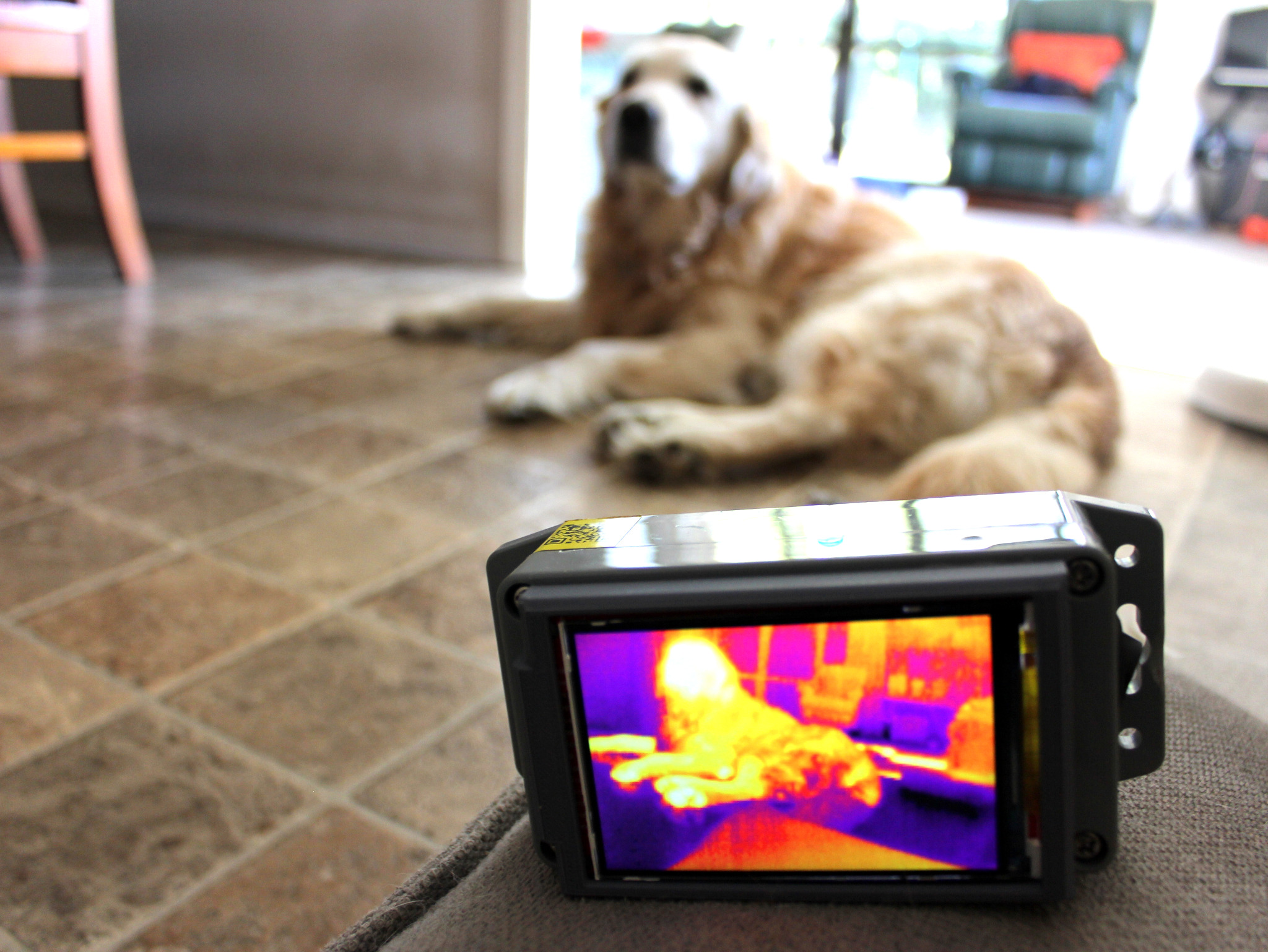
But the system was designed to do more than display an image.
Each thermal observation can also be associated with the GPS location of the site, providing additional context for later analysis.
Designed Around the Engineering Workflow
Off-the-shelf thermal cameras are designed to suit a broad range of customers. That inevitably means the user must adapt their workflow to whatever features the manufacturer provides.
With a custom instrument, the opposite becomes possible.
The technology can be adapted to the engineering workflow.
T4tech developed the electronics and software around Resene’s requirements, allowing the functionality to evolve specifically around how the instrument would be used in the field.
This included a mobile interface that allows the camera to pair with both iOS and Android devices.
From a phone, Resene engineers can view the live thermal image, capture snapshots and manage measurements without needing additional specialised equipment.
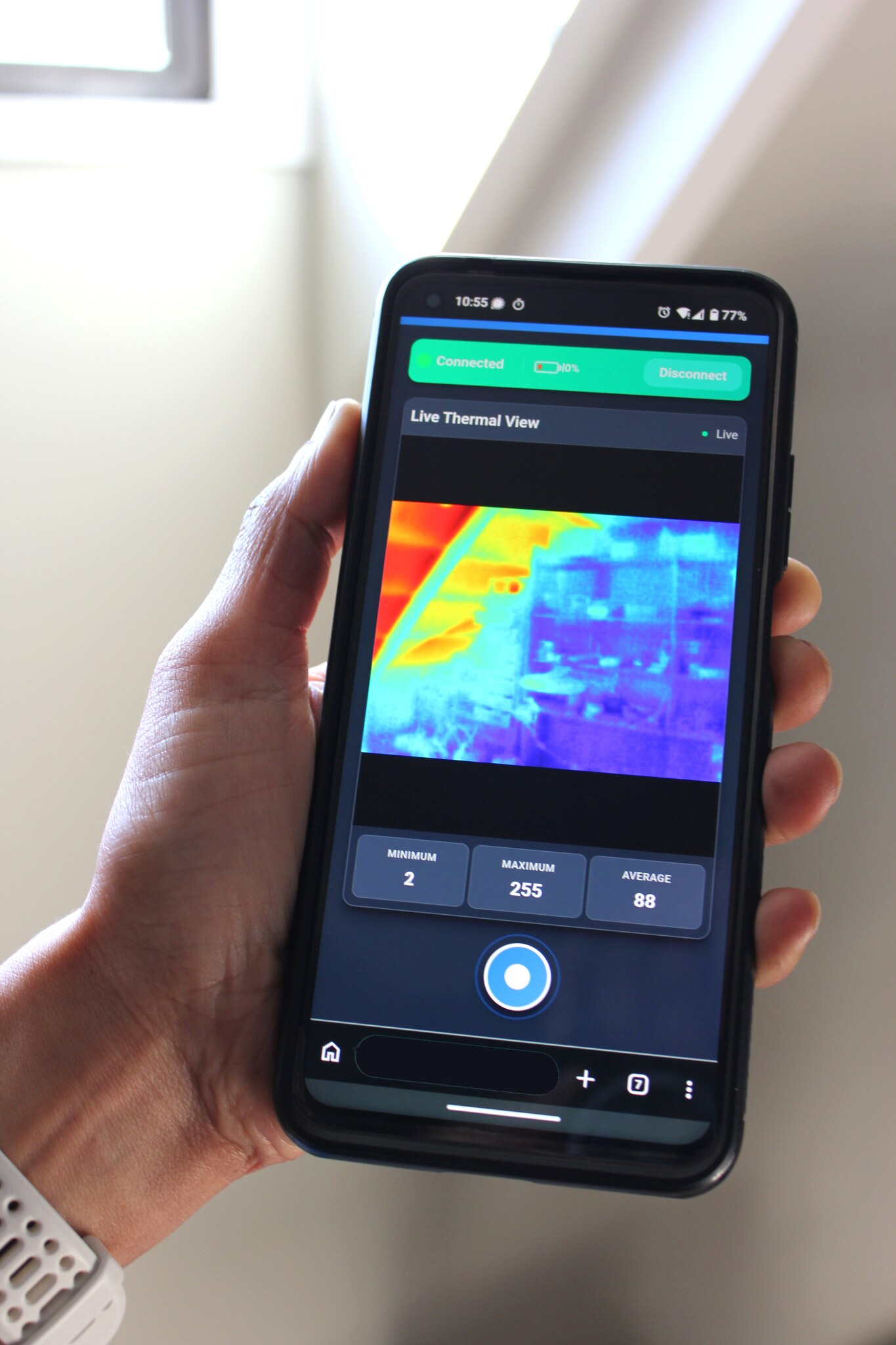
For field work, that simplicity matters.
Instead of transferring memory cards or carrying a laptop, measurements can be captured from a device already in the engineer’s pocket and prepared for upload and subsequent analysis.
Engineering for Portability
A useful field instrument has to work differently from laboratory equipment.
It has to be easy to transport, quick to deploy and capable of operating without an external power supply.
The thermal imaging system therefore incorporates its own rechargeable battery, allowing completely portable operation during site investigations.
Charging was also considered as part of the product rather than as an afterthought.
A magnetically detachable charging connection allows the instrument to be quickly connected for charging without repeatedly plugging and unplugging a conventional connector.
These may appear to be small details, but they become important when a device moves from an engineering prototype into something that people use repeatedly in the real world.
High-Performance Thermal Imaging
At the centre of the instrument is an aerospace-grade FLIR imaging core, integrated directly into T4tech’s custom electronics and software. This gives Resene a complete thermal imaging workflow:
- acquire and process infrared data
- display thermal imagery on the instrument
- transmit live images wirelessly to the mobile interface
- add new analysis tools and application-specific features as requirements evolve
The result is more than a thermal camera—it is an adaptable imaging platform designed around Resene’s engineering needs.
From Heat Maps to Better Materials
Thermal images reveal where heat behaves differently across real buildings. These measurements help Resene engineers:
- identify material interfaces, insulation issues and thermal bridges
- compare performance across buildings, materials and experimental constructions
- combine thermal observations with location and construction context
- feed field evidence back into material and building-system design
Build & Test
Thermal Measurement
Identify Weaknesses
Improve Design
For Resene, this means turning invisible heat patterns into practical evidence for better-performing construction materials and more energy-efficient homes.
Building the Complete Product
T4tech developed the system as an integrated product encompassing:
- aerospace-grade FLIR thermal imaging
- custom electronic hardware
- embedded firmware
- image acquisition and processing
- integrated display and user interface
- wireless communications
- iOS and Android connectivity
- GPS-linked data collection
- rechargeable battery and power management
- field-oriented mechanical integration
Bringing these elements together is often where the greatest engineering challenge lies.
A thermal sensor by itself is a component. A microcontroller is a component. A battery, display and mobile application are components.
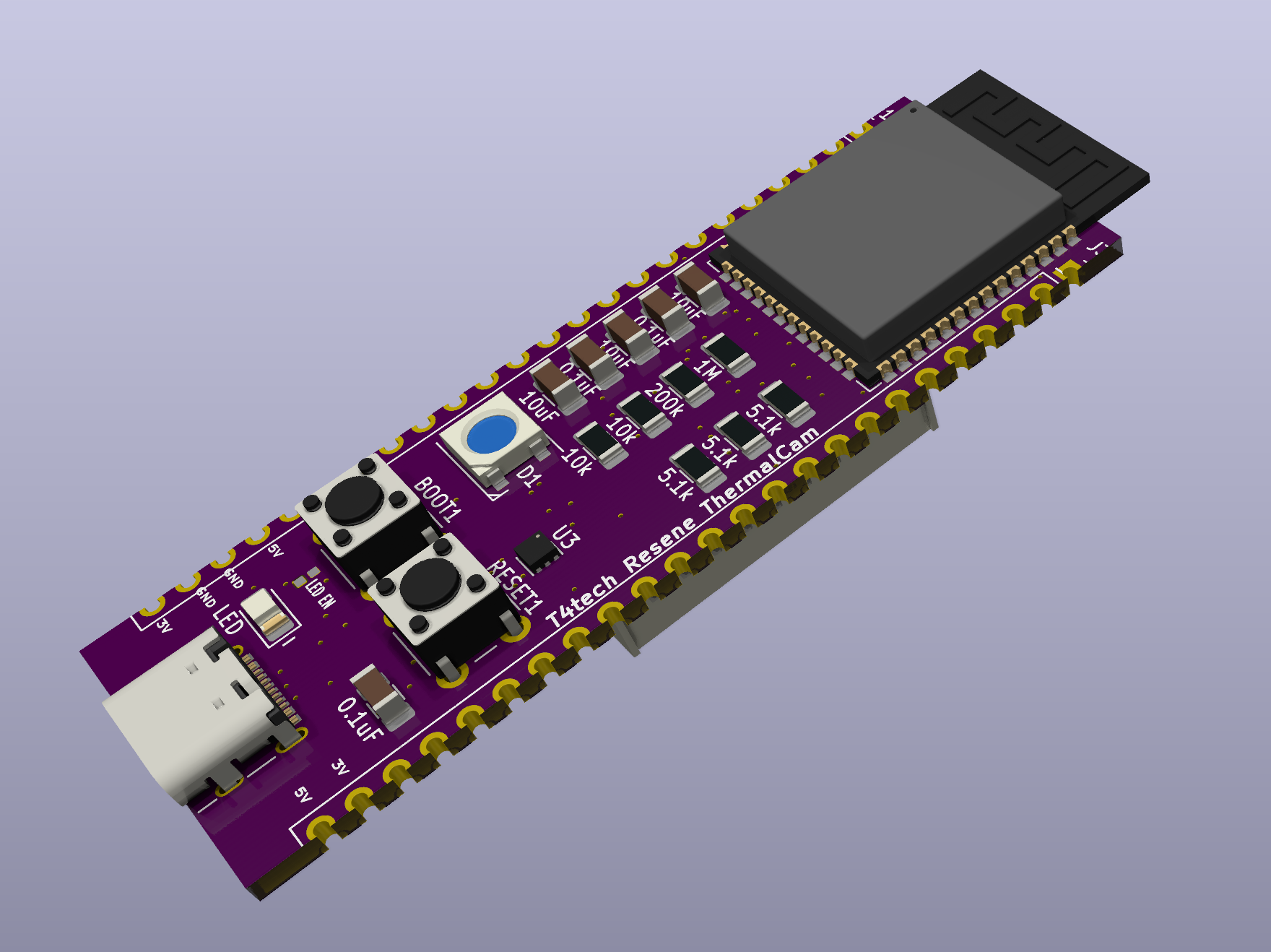
The useful product emerges when all of these technologies disappear behind a workflow that feels simple to the person using it.
Designed and Built in Christchurch
The Resene thermal imaging project is a good example of the kind of work we enjoy at T4tech: taking sophisticated sensing technology and turning it into a practical instrument built around a specific real-world problem.
From electronics and embedded software through to wireless connectivity and mobile applications, the complete system was designed and developed in Christchurch by T4tech.
The final result gives Resene engineers something far more useful than an off-the-shelf thermal camera — a portable platform that can evolve alongside their engineering work and help turn invisible thermal behaviour into information that can influence the materials used in tomorrow’s homes.